- Rating
- —/10
- Read
- —
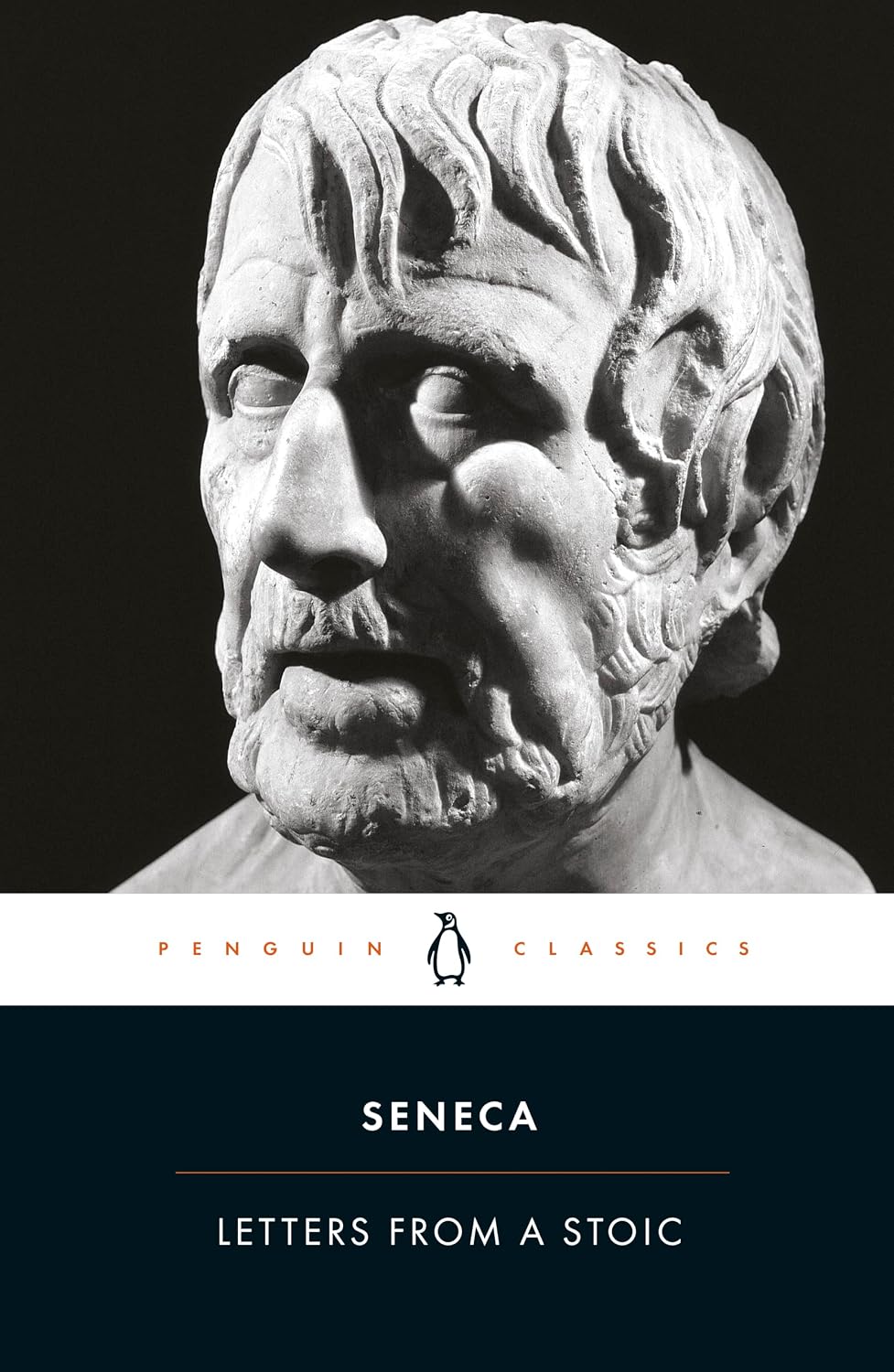
Lucius Annaeus Seneca was a Roman philosopher, playwright, and adviser to the emperor Nero. Near the end of his life, around AD 63 to 65, he wrote a long series of letters to his friend Lucilius, then a government official in Sicily. They read less like philosophy lectures than like advice from a mentor: guard your time, read deeply rather than widely, choose friends carefully, don’t fear what hasn’t happened yet, and practice for hardship before it arrives. Two thousand years later they’re still among the most practical things written on Stoicism.
Highlights
Furthermore, if you will pay close heed to the problem, you will find that the largest portion of our life passes while we are doing ill, a goodly share while we are doing nothing, and the whole while we are doing that which is not to the purpose. What man can you show me who places any value on his time, who reckons the worth of each day, who understands that he is dying daily?
They allow the cheapest and most useless things, which can easily be replaced, to be charged in the reckoning, after they have acquired them; but they never regard themselves as in debt when they have received some of that precious commodity, - time! And yet time is the one loan which even a grateful recipient cannot repay.
The primary indication, to my thinking, of a well-ordered mind is a man's ability to remain in one place and linger in his own company. Be careful, however, lest this reading of many authors and books of every sort may tend to make you discursive and unsteady. You must linger among a limited number of master thinkers, and digest
Food does no good and is not assimilated into the body if it leaves the stomach as soon as it is eaten; nothing hinders a cure so much as frequent change of medicine; no wound will heal when one salve is tried after another; a plant which is often moved can never grow strong. There is nothing so efficacious that it can be helpful while it is being shifted about. And in reading of many books is distraction.
Each day acquire something that will fortify you against poverty, against death, indeed against other misfortunes as well; and after you have run over many thoughts, select one to be thoroughly digested that day.
It is not the man who has too little, but the man who craves more, that is poor.
No man can have a peaceful life who thinks too much about lengthening it, or believes that living through many consulships is a great blessing. Rehearse this thought every day, that you may be able to depart from life contentedly; for many men clutch and cling to life, even as those who are carried down a rushing
Most men ebb and flow in wretchedness between the fear of death and the hardships of life; they are unwilling to live, and yet they do not know how to die.
I commend you and rejoice in the fact that you are persistent in your studies, and that, putting all else aside, you make it each day your endeavour to become a better man.
But I wish to share with you to-day's profit also. I find in the writings of our[2] Hecato that the limiting of desires helps also to cure fears: "Cease to hope," he says, "and you will cease to fear." "But how," you will reply, "can things so different go side by side?" In this way, my dear Lucilius: though they do seem at variance, yet they are really united. Just as the same chain fastens the prisoner and the soldier who guards him, so hope and fear, dissimilar as they are, keep step together; fear follows hope.
foresight, the noblest blessing of the human race, becomes perverted. Beasts avoid the dangers which they see, and when they have escaped them are free from care; but we men torment ourselves over that which is to come as well as over that which is past.
You must go to the scene of action, first, because men put more faith in their eyes than in their ears,[1]
Associate with those who will make a better man of you. Welcome those whom you yourself can improve.
I never spend a day in idleness; I appropriate even a part of the night for study. I do not allow time for sleep but yield to it when I must, and when my eyes are wearied with waking and ready to fall shut, I keep them at their task.
indulge the body only so far as is needful for good health. The body should be treated more rigorously, that it may not be disobedient to the mind. Eat merely to relieve your hunger; drink merely to quench your thirst; dress merely to keep out the cold; house yourself merely as a protection against personal discomfort. It matters little whether the house be built of turf, or of variously coloured imported marble; understand that a man is sheltered just as well by a thatch as by a roof of gold.
it is more pleasant to the artist to paint than to have finished painting."
"The wise man is self-sufficient."
"Cherish some man of high character, and keep him ever before your eyes, living as if he were watching you, and ordering all your actions as if he beheld them."
There are more things, Lucilius, likely to frighten us than there are to crush us; we suffer more often in imagination than in reality.
What I advise you to do is, not to be unhappy before the crisis comes; since it may be that the dangers before which you paled as if they were threatening you, will never come upon you; they certainly have not yet come. Accordingly, some things torment us more than they ought; some torment us before they ought; and some torment us when they ought not to torment us at all. We are in the habit of exaggerating, or imagining, or anticipating, sorrow.
Lucilius; we agree too quickly with what people say. We do not put to the test those things which cause our fear; we do not examine into them;
But life is not worth living, and there is no limit to our sorrows, if we indulge our fears to the greatest possible extent;
Accordingly, weigh carefully your hopes as well as your fears, and whenever all the elements are in doubt, decide in your own favour; believe what you prefer.
we are frightened at uncertainties, just as if they were certain. We observe no moderation. The slightest thing turns the scales and throws us forthwith into a panic.
Let another say. "Perhaps the worst will not happen." You yourself must say. "Well, what if it does happen? Let us see who wins! Perhaps it happens for my best interests; it may be that such a death will shed credit upon my life."
"The fool's life is empty of gratitude and full of fears; its course lies wholly toward the future."
It is clear to you, I am sure, Lucilius, that no man can live a happy life, or even a supportable life, without the study of wisdom; you know also that a happy life is reached when our wisdom is brought to completion, but that life is at least endurable even when our wisdom is only begun. This idea, however, clear though it is, must be strengthened and implanted more deeply by daily reflection;
Examine yourself; scrutinize and observe yourself in divers ways;
Cast away everything of that sort, if you are wise; nay, rather that you may be wise; strive toward a sound mind at top speed and with your whole strength.
If you wish to have leisure for your mind, either be a poor man, or resemble a poor man. Study cannot be helpful unless you take pains to live simply; and living simply is voluntary
There is an old adage about gladiators, – that they plan their fight in the ring; as they intently watch, something in the adversary's glance, some movement of his hand, even some slight bending of his body, gives a warning. We can formulate general rules and commit them to writing,
as to what is usually done, or ought to be done; such advice may be given, not only to our absent friends, but also to succeeding generations. In regard, however, to that second[1] question, – when or how your plan is to be carried out, – no one will advise at long range; we must take counsel in the presence of the actual situation.
"It is base to flinch under a burden. Wrestle with the duties which you have once undertaken. No man is brave and earnest if he avoids danger, if his spirit does not grow with the very difficulty of his task."
Hence men leave such advantages as these with reluctance; they love the reward of their hardships, but curse the hardships themselves.
A man has caught the message of wisdom, if he can die as free from care as he was at birth;
Men do not care how nobly they live, but only how long, although it is within the reach of every man to live nobly, but within no man's power to live long.
We Stoics are not subjects of a despot: each of us lays claim to his own freedom.
Only the poor man counts his flock.[6]
But what is your own opinion? How long shall you march under another man's orders? Take command, and utter some word which posterity will remember. Put forth something from your own stock. For this reason I hold that there is nothing of eminence in all such men as these, who never create anything themselves, but always lurk in the shadow of others, playing the rôle of interpreters, never daring to put once into practice what they have been so long in learning.
But it is one thing to remember, another to know. Remembering is merely safeguarding something entrusted to the memory; knowing, however, means making everything your own; it means not depending upon the copy and not all the time glancing back at the master.
How long shall you be a learner? From now on be a teacher as well! "But why," one asks,[8] "should I have to continue hearing lectures on what I can read?" "The living voice," one replies, "is a great help." Perhaps, but not the voice which merely makes itself the mouthpiece of another's words, and only performs the duty of a reporter.
proverb "A task once begun is half done."
I give much credit to the judgment of great men; but I claim something also for my own.